The Red Sea Coast: Reefs, Sinai and Sharm el-Sheikh
Egypt has two great coastlines, and the Red Sea is the warmer and wilder of the two. Hurghada, on the western shore of the sea, and Sharm el-Sheikh, at the southern tip of the Sinai Peninsula, are Egypt's two main Red Sea resort cities and the gateways to some of the finest coral reefs in the world. Inland, the Sinai mountains hold one of the oldest working monasteries in Christendom and the mountain where, by biblical tradition, Moses received the Ten Commandments.
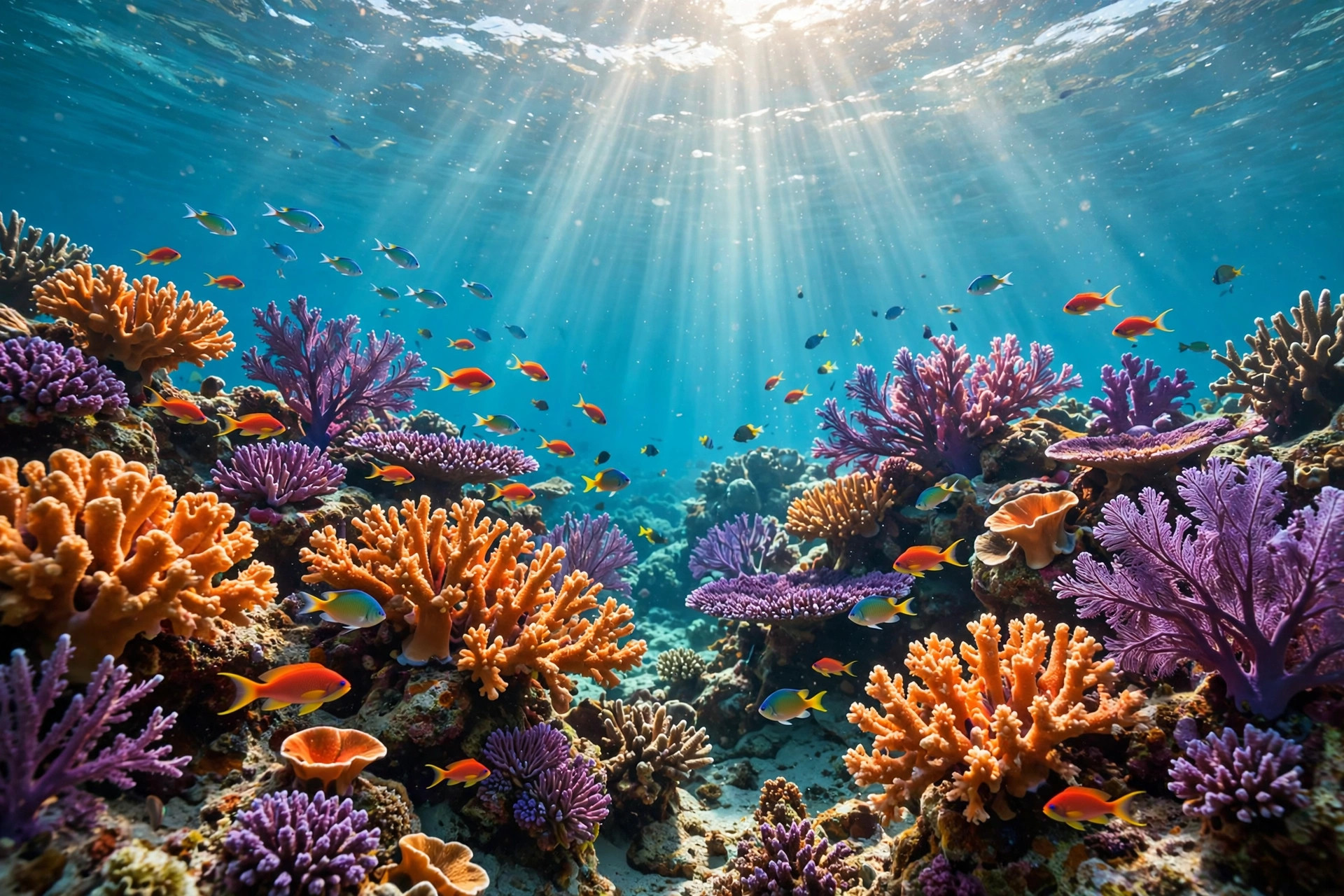
The Reefs: An Underwater World
The Red Sea is famous among divers and snorkellers for a simple reason: warm, clear water and reefs that begin close to the shore. The water temperature stays above about 21 degrees Celsius all year round, and visibility is commonly 20 to 30 metres — both figures are guide estimates, so they should be read as approximate. Coral gardens, steep reef walls and sandy lagoons lie a short swim from the beaches of Hurghada and Sharm el-Sheikh, and the reefs are home to a remarkable range of fish, from clownfish sheltering in anemones to reef sharks patrolling the drop-offs.
What makes the Red Sea special is the combination of warmth and clarity. The sea is narrow and deep, with very little river water flowing into it, so the water stays clear, and the reefs grow in water that is warm enough for coral to thrive all year. That is why the resorts here stay popular through the winter, when the Nile Valley is at its best for sightseeing and the Red Sea is still warm enough to swim in. The reefs are also fragile, and responsible visitors are asked to look without touching: coral is a living animal, and a single careless fin kick can break growth that took decades.
Watch: Coral Reefs 101 | National Geographic (National Geographic)
Ras Mohammed National Park
At the southern tip of Sinai, where the Gulfs of Suez and Aqaba meet, about 12 kilometres from Sharm el-Sheikh, lies Ras Mohammed National Park. It was declared a national park in 1983 — Egypt's first national park — and it protects both the reefs and the desert shore around them. Its most famous dive sites are the reef walls of Shark Reef and Yolanda Reef, also spelled Jolanda Reef, where the wall drops away into deep blue water and large fish gather in the current. On land, the park also protects mangroves and salt marshes, a rare green fringe in an otherwise bare desert coast.
Ras Mohammed is the place where the two sides of the Red Sea meet: the desert mountains of Sinai falling into warm water, and the reefs beginning almost at the shoreline. It is also a reminder that Egypt's protected areas are not only about ancient stone. The park was created to keep the reefs alive for the future, and it remains the benchmark against which the rest of the coast is measured.
Saint Catherine's Monastery and Mount Sinai
Inland from the coast, at the foot of Mount Sinai, stands St Catherine's Monastery, built between 548 and 565 CE under the Byzantine Emperor Justinian I. It is one of the oldest continuously operating Christian monasteries in the world, and its library is second in significance only to the Vatican's, according to the guides that describe it — that ranking is a guide claim, and it is given here as such. The monastery is a fortress as much as a church, with thick walls raised against raiders, and inside them stand a basilica, a chapel and a library that have been in continuous use for nearly fifteen centuries. The Saint Catherine Area was inscribed by UNESCO as a World Heritage Site in 2002.
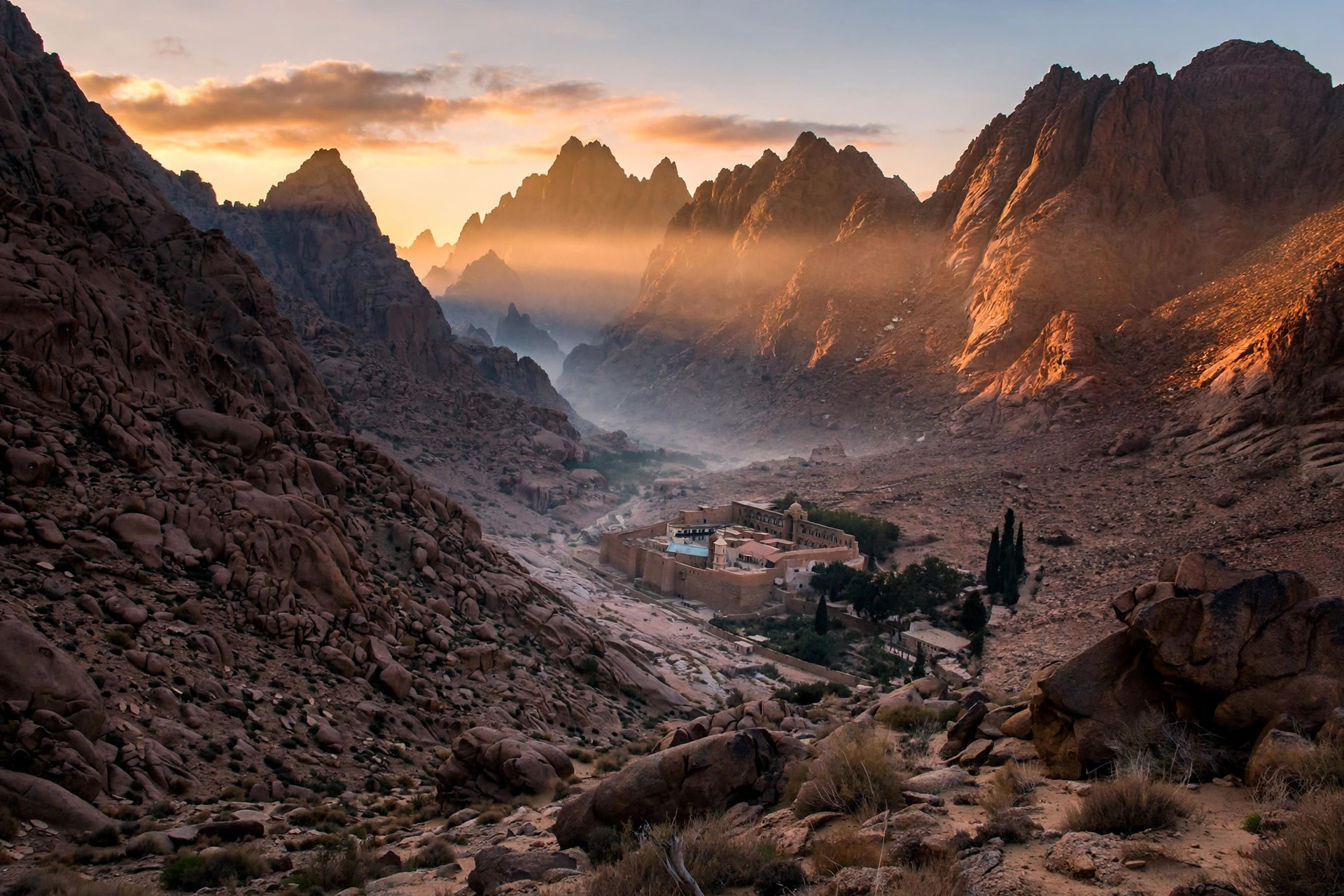
Mount Sinai itself, known in Arabic as Gebel Musa, is 2,285 metres high. By biblical tradition it is the mountain where Moses received the Ten Commandments, and that identification should be presented as tradition rather than as archaeologically proven fact. The classic climb is a night ascent of about two and a half to three hours by the camel path, timed to reach the summit for sunrise, and the Steps of Repentance — the steep stone stairway — number about 3,750 steps in total. Nearby stands Mount Catherine, at 2,629 metres the highest mountain in Egypt. The monastery is open in the mornings only and closed on some days, so visitors should check before going rather than relying on fixed hours.
| Main resort cities | Hurghada, on the western shore of the Red Sea; Sharm el-Sheikh, at the southern tip of Sinai |
|---|---|
| Water | Above about 21 degrees Celsius all year; visibility commonly 20–30 m (guide estimates) |
| Ras Mohammed | Southern tip of Sinai, about 12 km from Sharm el-Sheikh; declared Egypt's first national park in 1983 |
| Famous reefs | Shark Reef and Yolanda (Jolanda) Reef; mangroves and salt marshes protected in the park |
| St Catherine's Monastery | Built 548–565 CE under Emperor Justinian I; one of the oldest continuously operating monasteries in the world |
| Saint Catherine Area | UNESCO World Heritage Site, inscribed 2002 |
| Mount Sinai (Gebel Musa) | 2,285 m high; night climb about 2.5–3 hours; Steps of Repentance about 3,750 steps |
| Mount Catherine | 2,629 m — the highest mountain in Egypt |
Sinai and the Coast
The Sinai Peninsula is geographically in Asia, although it is part of Egypt, and its interior is Bedouin land. The Sinai Trail is a long-distance Bedouin-run walking route through the mountains, and the Bedouin communities of the peninsula are the keepers of its desert knowledge — its water sources, its paths and its stories. Hurghada and Sharm el-Sheikh themselves are modern resort cities, built for the sea and the sun; no verified founding date for either as a modern resort was found, so this page gives none.
The Red Sea coast works best as the second half of a trip to Egypt. The Nile Valley gives you the temples, tombs and museums; the Red Sea gives you the water, the reefs and the desert mountains. Between them they cover the whole range of the country, from the deepest history to the living natural world, and from the crowded streets of Cairo to a reef wall dropping away into blue water at the tip of Sinai.
