The Egyptian Museum in Cairo
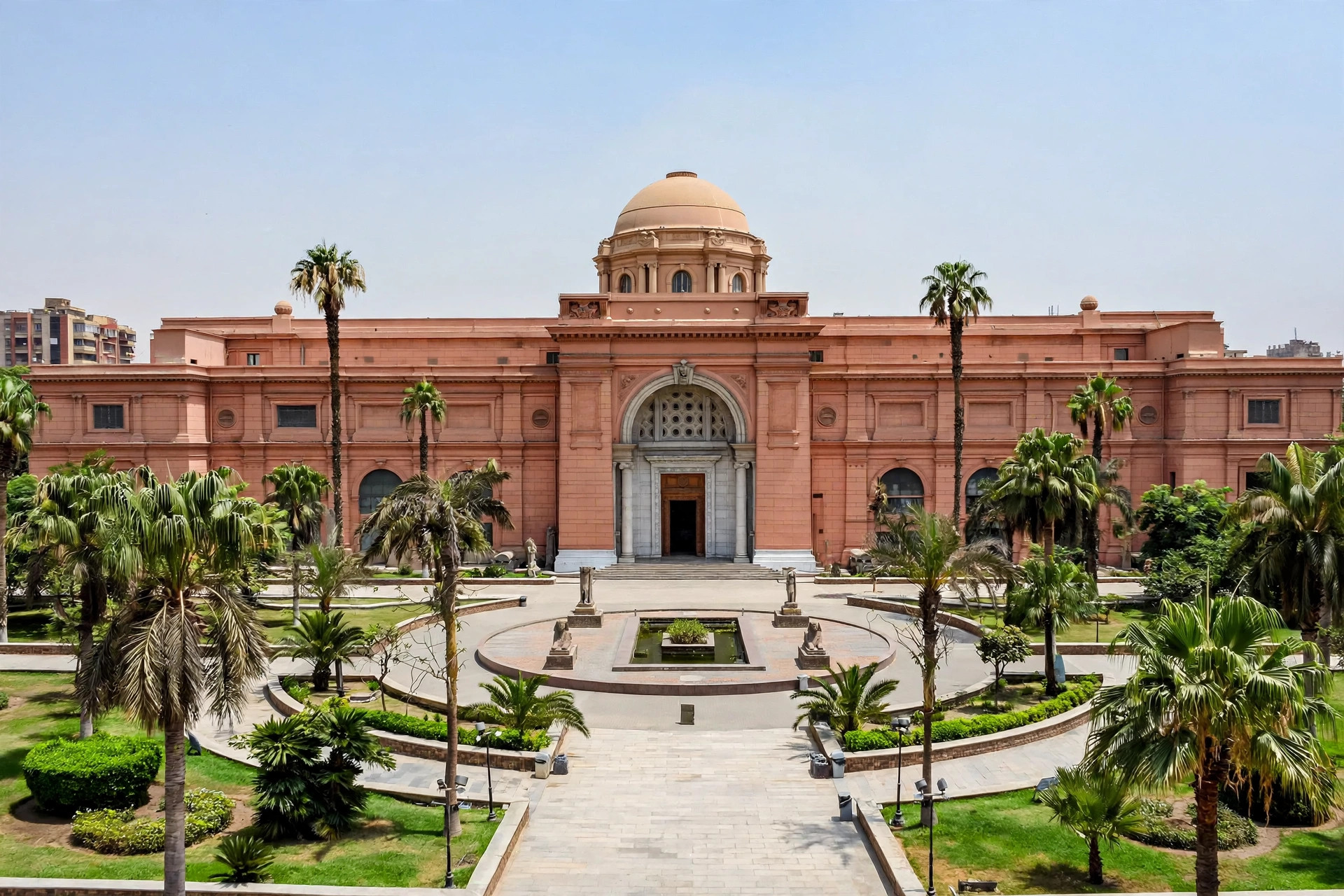
On Tahrir Square in the heart of Cairo stands a pink neoclassical building that has held the treasures of ancient Egypt for more than a century. The Egyptian Museum opened on 15 November 1902, and it remains open today, with a collection of more than 120,000 objects running from the predynastic age to the Greco-Roman era.
A museum built for its collection
The museum was one of the first purpose-built museums in the Middle East, and it is the oldest museum of archaeology in the region. It was designed by the French architect Marcel Dourgnon, and its pink facade, its high halls and its grand staircase have become as famous as many of the objects inside. The collection itself was founded on the work of Auguste Mariette, the French archaeologist who founded the Egyptian antiquities service in 1858 and began gathering the objects that would fill the museum. Mariette is buried in the museum garden, a rare honour that shows how closely his name is tied to the place.
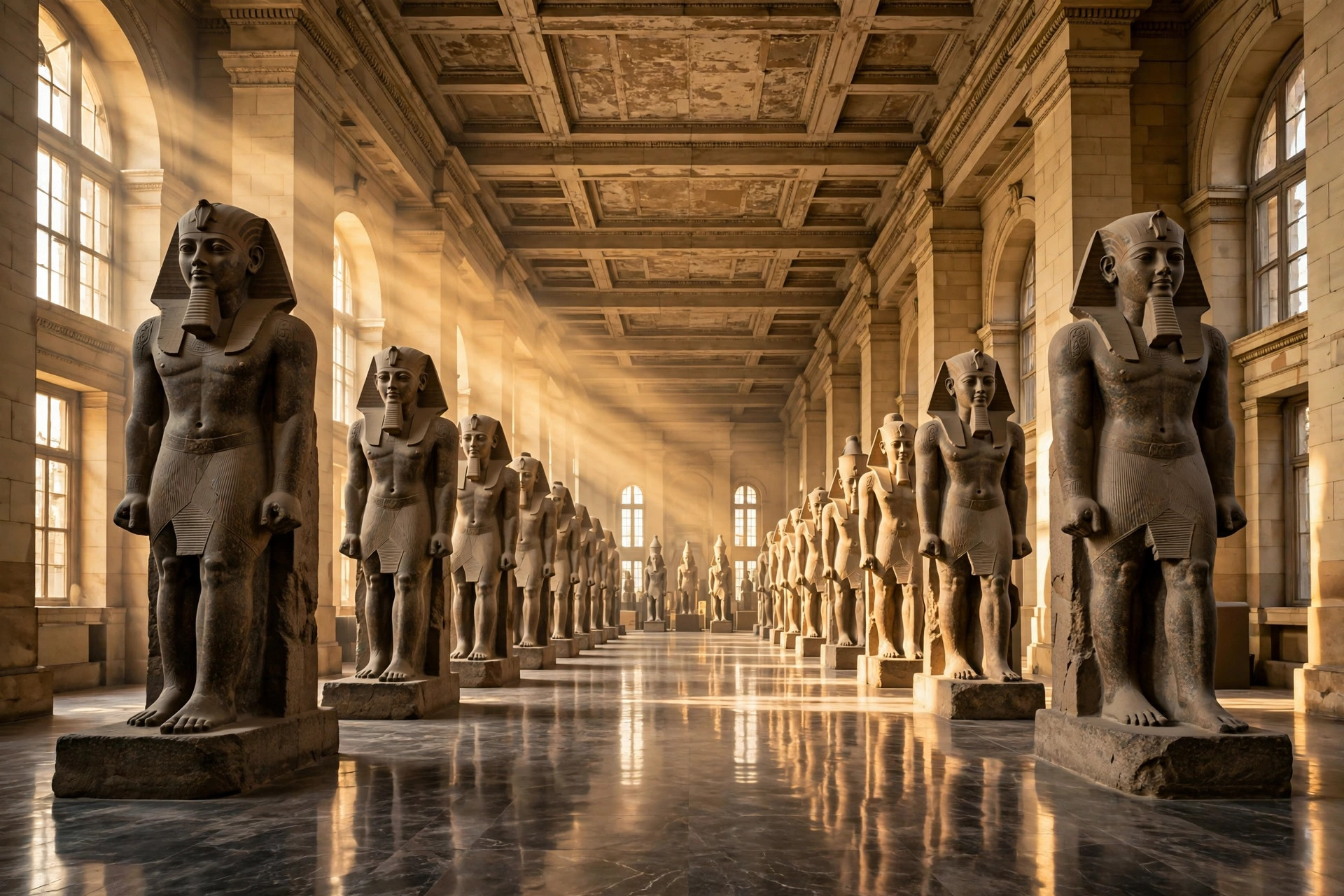
More than 120,000 objects are in the collection, and only a fraction is ever on display at one time. That is part of the museum's character: the halls are crowded with statues, coffins, jewellery, papyri and everyday objects, arranged in a way that has changed little over the decades. Walking through it feels less like visiting a modern gallery and more like entering the storehouse of a civilisation — which is, in a sense, exactly what it is.
What to see
Among the highlights still on display at Tahrir Square are the Narmer Palette, the carved slate that depicts the unification of Upper and Lower Egypt around 3100 BCE and is one of the most important objects of ancient Egypt. There are also the great statues of Khafre and Menkaure, the builders of the second and third pyramids of Giza, carved in dark stone with a calm and power that has survived more than 4,500 years.
Other treasures include the gold of Tanis, the glittering burial goods of kings from the Third Intermediate Period, and the Amarna collection, the art of the reign of Akhenaten, the pharaoh who tried to remake Egyptian religion around a single god in the 14th century BCE. Around them stand monumental statues from temples across Egypt, collected over more than a century of excavation. The museum covers the whole span of pharaonic history, from the earliest farming villages to the age when Egypt was ruled by Greeks and Romans.
What has moved — and where it went
Visitors who come looking for the two most famous displays in the museum's history will find that both have moved, and it is important to say so plainly. The royal mummies are no longer at Tahrir Square. On 3 April 2021, twenty-two mummies — eighteen kings and four queens, including Ramesses II, Seti I and Hatshepsut — were carried through Cairo in the televised Pharaohs' Golden Parade to their new home, the National Museum of Egyptian Civilisation in Fustat.
Tutankhamun's treasures have moved too. The complete collection — more than 5,000 objects from his tomb, including the gold mask — is now at the Grand Egyptian Museum near Giza, which was inaugurated on 1 November 2025 and opened to the public on 4 November 2025. It is the first time the whole collection has been displayed together. Tutankhamun's tomb, KV62 in the Valley of the Kings, was found by Howard Carter in 1922, and the young king's mummy remains in the Valley of the Kings.
Neither move means the Egyptian Museum is closed or replaced. It is still open, and it still holds the bulk of its 120,000-object collection. What has changed is the shape of Egypt's museum world: the story of ancient Egypt is now told across several museums, and the museum on Tahrir Square remains the historic heart of it — the place where the collection began, and where the Narmer Palette, the statues of the pyramid builders and the gold of Tanis can still be seen.
The museum and the city
The museum stands on Tahrir Square, the great open space at the centre of modern Cairo, and its history is tied to the city's. It has survived revolutions, wars and the opening of newer museums, and it has done so by remaining what it always was: a vast, crowded, magnificent storehouse of the ancient world, in a building that was designed for exactly that purpose. For many visitors it is the first place they meet ancient Egypt, and for many it remains the most memorable — not because it is the newest or the most polished, but because nowhere else puts you so close to so much of the ancient world at once.
| Opened | 15 November 1902, on Tahrir Square, Cairo |
|---|---|
| Architect | Marcel Dourgnon, French architect; pink neoclassical building |
| Founder of the collection | Auguste Mariette, who founded the antiquities service in 1858; buried in the museum garden |
| Collection | More than 120,000 objects, from the predynastic age to the Greco-Roman era; only a fraction is on display at one time |
| Highlights still here | Narmer Palette, statues of Khafre and Menkaure, gold of Tanis, Amarna collection, monumental statuary |
| Royal mummies moved | 22 mummies (18 kings, 4 queens) moved to the National Museum of Egyptian Civilisation in Fustat on 3 April 2021 |
| Tutankhamun's treasures moved | Complete collection of more than 5,000 objects now at the Grand Egyptian Museum, inaugurated 1 November 2025, public opening 4 November 2025 |
Watch: Pyramids and King Tut (Full Episode) | Lost Treasures of Egypt | National Geographic (National Geographic)