Egypt Through the Ages — 7,000 Years of History and Places
Egypt is one of the few places on earth where you can walk through the whole story of a civilisation in a single journey: from farming villages on the banks of the Nile, to the pyramids of Giza, the temples of Luxor, the churches and mosques of Cairo, and the coral reefs of the Red Sea. This site tells that story place by place, with the facts checked and the wonders left standing on their own.
A land shaped by the Nile
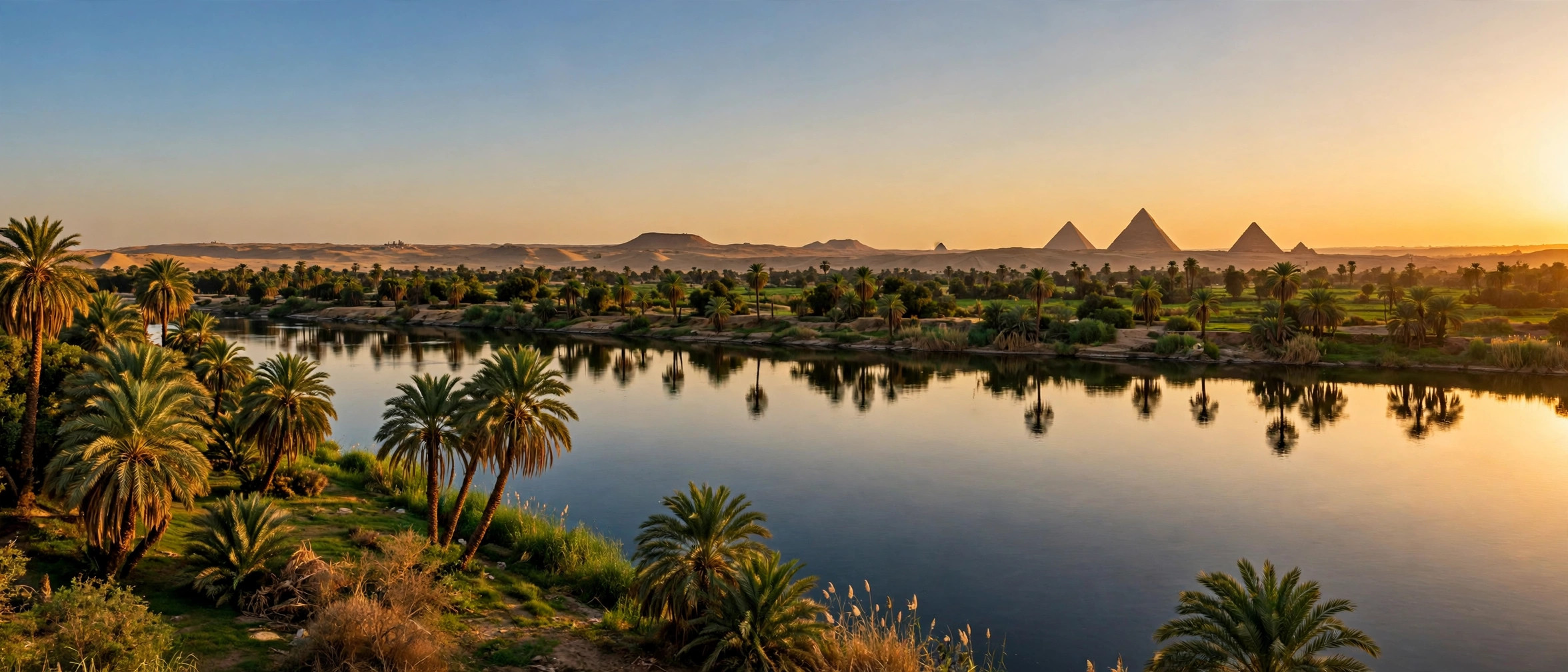
Everything in Egypt begins with the Nile. The river is about 6,650 kilometres long and is usually listed as one of the longest rivers in the world, although some measurements favour the Amazon, so the honest way to put it is that the Nile is one of the world's longest rivers. It flows from south to north, which is why the ancient Egyptians called the south "Upper Egypt" and the Delta in the north "Lower Egypt": upper and lower here mean upstream and downstream, not north and south on a map.
The Nile made Egypt possible. Its yearly flood once laid fresh, fertile soil along its banks, and even today roughly 95 percent of Egyptians live close to the river. The country has about 110 million people, and almost all of them live in the narrow green ribbon of the Nile Valley and the Delta, with vast desert stretching away on either side. Egypt sits in north-east Africa, with the Sinai Peninsula in Asia, and the Suez Canal, opened in 1869 and about 193 kilometres long, joins the Mediterranean Sea to the Red Sea.
To understand Egypt, start with that contrast: a thin line of green life in the middle of desert, and a river that has carried boats, grain, stone and ideas for thousands of years. The pyramids were built with stone shipped down the Nile. The temples of Luxor and the monuments of Nubia stand where the river allowed people to live, farm and build. Even the modern cities follow the same pattern: Cairo, Luxor and Aswan are all river cities first.
More than 5,000 years of recorded history
The headline of this site says 7,000 years, and that is a rounded phrase that covers the long story of settlement along the Nile, including the farming villages of the predynastic age. The precise, recorded story begins with the unification of Upper and Lower Egypt around 3100 BCE, under one king, traditionally Narmer, who is identified by most Egyptologists with Menes. That is more than 5,000 years of recorded history, and the pharaonic civilisation that followed lasted nearly 3,000 years, until Rome annexed Egypt in 30 BCE.
After the pharaohs came the Greeks and Romans, then the Coptic Christian centuries, then the Arab conquest of 641–642 CE, the founding of Cairo by the Fatimids in 969 CE, the Mamluks, the Ottomans, and the modern state. Each age left buildings that still stand: a Roman fortress under a church in Old Cairo, a Fatimid mosque beside a Mamluk bazaar, a 19th-century canal that still carries the world's shipping. Egypt is not one period frozen in time; it is layer upon layer, and this site visits each layer where it can still be seen.
The scale of that history is hard to grasp until you stand in front of it. The Great Pyramid of Giza was the tallest structure made by human hands for more than 3,800 years. The temple of Karnak was built and rebuilt over some 2,000 years by more than 30 pharaohs. The temples of Abu Simbel were cut into pieces and moved to higher ground in the 1960s so they would not drown under Lake Nasser. Few countries ask so much of a visitor, and few reward the effort so richly.
Seven UNESCO World Heritage Sites
Egypt has seven UNESCO World Heritage Sites: six cultural sites and one natural site. Five were inscribed in 1979: Memphis and its Necropolis, which runs from Giza to Dahshur; Ancient Thebes with its Necropolis, the Luxor of today; the Nubian Monuments from Abu Simbel to Philae; Historic Cairo; and Abu Mena. The Saint Catherine Area in Sinai followed in 2002, and Wadi Al-Hitan, the Whale Valley, was inscribed in 2005 as Egypt's only natural World Heritage Site.
That list is a good map for a first journey. It covers the pyramids, the temples of the New Kingdom, the rescued monuments of Nubia, the medieval city of Cairo and the monastery at the foot of Mount Sinai. Every one of them has its own page on this site, with the story of how it was built, who built it, and why it still matters.
| At a glance | Egypt in north-east Africa, with Sinai in Asia |
|---|---|
| The Nile | About 6,650 km long; one of the world's longest rivers; flows south to north |
| People | About 110 million; roughly 95% live close to the Nile |
| Recorded history begins | Unification of Upper and Lower Egypt, c. 3100 BCE |
| Pharaonic civilisation | Nearly 3,000 years, to 30 BCE |
| UNESCO World Heritage Sites | 7 — six cultural, one natural |
| Suez Canal | Opened 1869; about 193 km long |
| Visitors in 2024 | A record 15.7 million tourists |
Explore the places
Choose a place below to begin. Each page tells the full story of one part of Egypt: what it is, when it was built, who built it, and what to look for when you stand in front of it.
Ancient Egypt
The story of the world's first great civilisation, from unification c. 3100 BCE to Rome.
🔺Pyramids of Giza
The last surviving Wonder of the Ancient World, and the Great Sphinx beside it.
🏛️Egyptian Museum
Cairo's great museum on Tahrir Square, home to more than 120,000 objects.
🛕Luxor
Ancient Thebes: Karnak, Luxor Temple and the Valley of the Kings.
🏝️Aswan
Philae, Abu Simbel and the gateway to Nubia at the First Cataract.
⚓Alexandria
The city Alexander founded in 331 BCE, its library, lighthouse and citadel.
⛪Coptic Cairo
The Hanging Church, Abu Serga and the Ben Ezra Synagogue in Old Cairo.
🕌Islamic Cairo
Fatimid, Mamluk and Ottoman Cairo: mosques, the Citadel and Khan el-Khalili.
🗿Nubia
The land of Kush, its temples and the great UNESCO rescue of the 1960s.
🌴Siwa Oasis
The desert oracle Alexander consulted, salt lakes and the old town of Shali.
🐠Red Sea
Coral reefs, Ras Mohammed National Park and St Catherine's Monastery in Sinai.
⏳Timeline
The key milestones of Egyptian history, from c. 5000 BCE to the present day.
🧭Visiting Egypt
When to go, how to travel between the sites, and how to visit with respect.
A new chapter: the Grand Egyptian Museum
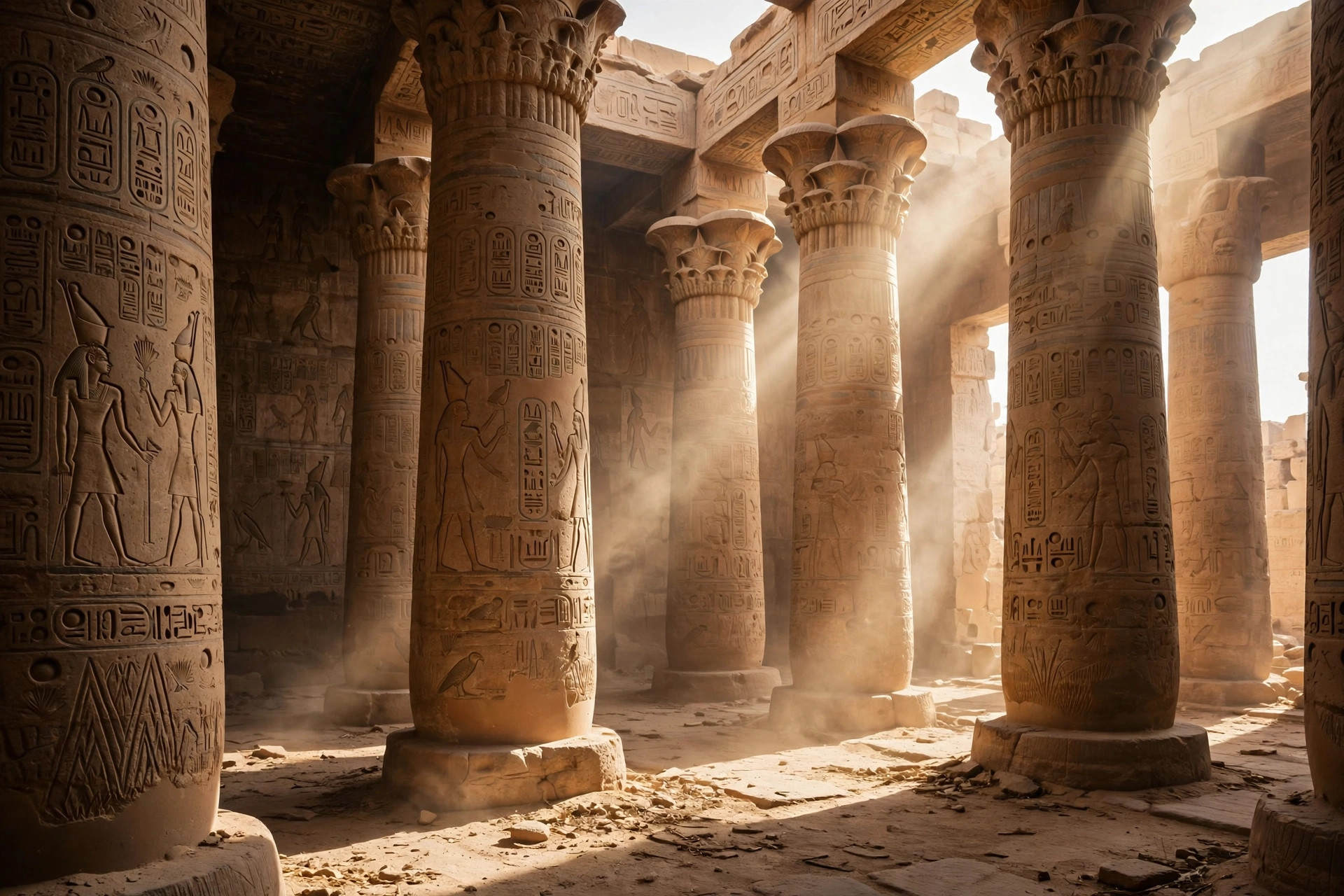
Egypt's story is still being written. The Grand Egyptian Museum, near Giza, was inaugurated on 1 November 2025 and opened to the public on 4 November 2025. It is described as the largest museum dedicated to a single civilisation, with a collection of more than 100,000 objects. For the first time, the complete Tutankhamun collection — more than 5,000 objects from his tomb — is displayed together in one place.
The opening of the Grand Egyptian Museum also changed the older museum on Tahrir Square: Tutankhamun's treasures, including the gold mask, moved there from Cairo, and the royal mummies had already moved to the National Museum of Egyptian Civilisation in Fustat on 3 April 2021. The Egyptian Museum in Cairo remains open, with the bulk of its 120,000-object collection. Together, the two great museums now tell the story of ancient Egypt between them, and both are covered on this site.
Egypt today
Egypt welcomed a record 15.7 million tourists in 2024, and the number keeps growing as new museums open and old sites are restored. Yet the country is far more than its monuments. It is a living place: the markets of Khan el-Khalili, the villages of Nubia, the oasis towns of the Western Desert, the fishing boats of the Red Sea and the monasteries of Sinai. The pages of this site begin with the ancient stones, but they always come back to the people who built them, saved them, and still live beside them.
Start with the story of ancient Egypt itself, then follow the river south from the Pyramids of Giza to Luxor and Aswan, or east to Alexandria and the Sinai. However you travel, the thread is the same: the Nile, the stone, and more than 5,000 years of people who refused to be forgotten.
Watch: Ancient Egypt 101 | National Geographic (National Geographic)